
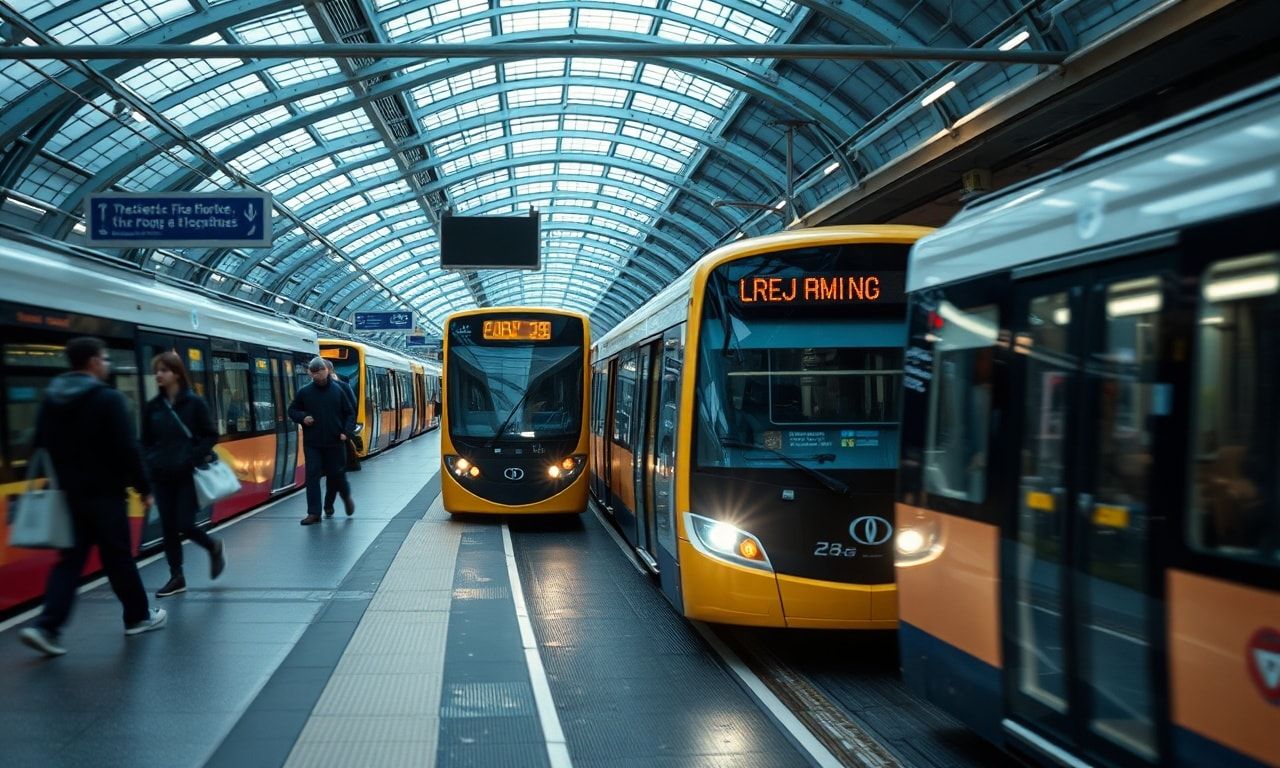

The Rise of Public Transport Strikes in Europe
In recent months, European cities have seen a significant increase in public transport strikes, causing widespread disruption and inconvenience for commuters. From Berlin to Paris, and London to Barcelona, these strikes have become a common occurrence, often sparked by disputes over wages, working conditions, and government policies. The frequency and scale of these strikes have raised concerns about the reliability and sustainability of public transport systems across the continent.
Berlin: A City in Motion Despite Strikes
Berlin, known for its extensive and efficient public transport network, has not been immune to these disruptions. The city’s public transport system, operated by the Berliner Verkehrsbetriebe (BVG), has faced several strikes this year. Despite these challenges, Berlin has managed to keep its public transport system running, albeit with some delays and cancellations. For the latest updates on Berlin’s public transport, residents and visitors can refer to Berlin Öffentlicher Nahverkehr News, which provides real-time information and news on the city’s transport system.
The Impact on Commuters and Businesses
The frequent strikes have had a significant impact on commuters and businesses alike. Commuters often find themselves stranded or forced to find alternative means of transportation, leading to increased travel times and costs. Businesses, on the other hand, face disruptions in their operations, with employees unable to reach their workplaces on time. The economic impact of these strikes is substantial, with estimates suggesting that each day of strike action can cost businesses millions of euros in lost productivity.
Government Responses and Solutions
Governments across Europe have responded to the rise in public transport strikes in various ways. Some have opted for dialogue and negotiation, aiming to address the root causes of the strikes and find mutually beneficial solutions. Others have taken a more hardline approach, implementing laws to limit the ability of workers to strike and ensuring that essential services remain operational. However, these measures have not been without controversy, with critics arguing that they infringe on workers’ rights and could lead to further unrest.
Case Study: France’s Approach to Strike Action
France, which has a long history of strike action, has implemented a series of measures to mitigate the impact of public transport strikes. These include the introduction of a minimum service obligation, which requires a certain percentage of services to continue running during strike action. Additionally, the French government has invested heavily in alternative transport options, such as bike-sharing schemes and increased bus services, to provide commuters with viable alternatives during strikes.
The Future of Public Transport in Europe
As Europe continues to grapple with the challenges posed by public transport strikes, the future of the continent’s transport systems remains uncertain. While some cities have managed to adapt and find solutions to the disruptions, others continue to struggle. The key to resolving these issues lies in open dialogue, effective negotiation, and a commitment to finding sustainable and equitable solutions that benefit both workers and commuters alike.
Innovative Solutions and Technological Advancements
In the face of these challenges, cities are also exploring innovative solutions and technological advancements to improve the resilience of their public transport systems. These include the use of artificial intelligence to predict and mitigate the impact of strikes, the development of real-time information systems to keep commuters informed, and the implementation of flexible working arrangements to reduce the reliance on public transport during peak hours.
Conclusion
The rise of public transport strikes in Europe is a complex issue that requires a multifaceted approach. While the immediate focus is on addressing the disruptions caused by strike action, the long-term solution lies in creating sustainable and resilient public transport systems that can withstand the challenges of the 21st century. By investing in technology, fostering open dialogue, and committing to equitable solutions, European cities can ensure that their public transport systems remain a reliable and efficient means of transportation for all.
In the realm of groundbreaking discoveries, our latest feature, global science research advances, offers a comprehensive look at the innovative work reshaping our world.
In today’s fast-paced world, finding spiritual grounding can be challenging; explore how to navigate this balance in faith in daily life.
You may also find The Future of Home Design: Predictions helpful as it covers related aspects of this subject.