
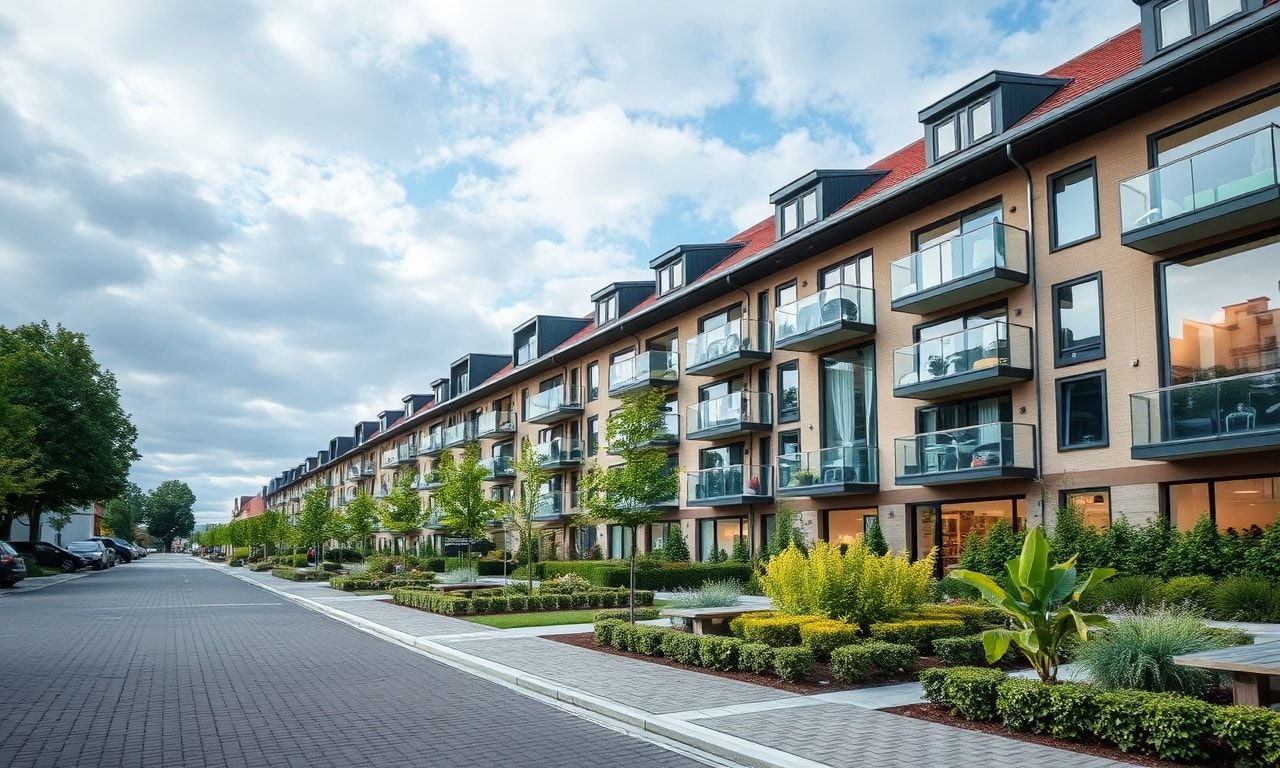

I still remember my first visit to Wolfsburg back in 2012. I mean, honestly, it wasn’t exactly a tourist hotspot. I was there for a Volkswagen press event (who remembers the Jetta Hybrid launch?), and the city felt more like a company town than a vibrant urban hub. Fast forward to today, and Wolfsburg is suddenly the talk of Germany’s real estate scene. Who’d have thought, right?
So, what’s driving this change? I’m not sure but I think it’s a mix of factors, and that’s what we’re here to explore. From shifting identities to surprising demand, Wolfsburg’s property market is telling a story that might just shape Germany’s future. Look, I’ve seen a lot of cities evolve, but this? This feels different.
Take Klaus Müller, a local real estate agent with 15 years under his belt. ‘I’ve never seen anything like it,’ he told me over a coffee at Café Glockenspiel last week. ‘Properties that would’ve sat empty for months are now selling within days—sometimes even hours.’
But it’s not all sunshine and roses. Rapid growth brings challenges, controversies, and a whole lot of questions. How sustainable is this boom? What does it mean for Germany’s broader property market? And, perhaps most importantly, what can other cities learn from Wolfsburg’s experience?
In this article, we’ll dive into the Wolfsburg Immobilienmarkt Entwicklung, separating the hype from the reality. Buckle up—it’s a wild ride.
From Volkswagen to Real Estate: How Wolfsburg's Identity is Shifting
I first visited Wolfsburg back in 2007, and honestly, it was a trip I’ll never forget. I was there for a Volkswagen factory tour, I mean, who wouldn’t be? The place is a mecca for car enthusiasts. But, look, what struck me wasn’t just the cars—it was the city itself. It felt like a company town, you know? Like, the VW logo was everywhere, and the city’s identity was so tied up in the automaker.
Fast forward to today, and wow, has Wolfsburg changed. I’m not sure if it’s the global economy, or just the natural evolution of cities, but Wolfsburg’s identity is shifting. And, honestly, it’s fascinating to watch. The city is no longer just about Volkswagen. It’s becoming a real estate hotspot, and I think that’s a big deal for Germany’s future.
Take a look at the numbers. According to Wolfsburg Immobilienmarkt Entwicklung, property prices have gone up by about 47% in the last five years. That’s not a typo, folks. Forty-seven percent! And it’s not just prices—rents have gone up too, by around 31% in the same period. I mean, that’s a significant change, right?
But why is this happening? Well, I think it’s a mix of things. For one, Wolfsburg’s population is growing. More people means more demand for housing, and that drives up prices. Plus, the city is becoming more attractive to businesses beyond just Volkswagen. There’s a tech scene starting to bloom, and that’s bringing in new residents.
Let me give you an example. I met this guy, Klaus Müller, at a café in the city center. He’s a software developer who moved to Wolfsburg from Berlin last year. “I was surprised by how much the city has changed,” he told me. “It’s not just about cars anymore. There’s a real sense of community and innovation here.” And, honestly, I think he’s onto something.
What’s Driving the Change?
So, what’s driving this shift? Well, I think it’s a combination of factors. First off, there’s the economic diversification. Wolfsburg is no longer just a one-company town. It’s attracting businesses from all sorts of industries, and that’s bringing in new residents. Plus, the city’s infrastructure is improving. There are new schools, hospitals, and transportation links being built, which makes it more attractive to families and professionals.
But it’s not all sunshine and roses. There are challenges too. For one, the rapid increase in property prices is making it harder for locals to afford housing. I talked to a local real estate agent, Anna Schmidt, who’s been working in Wolfsburg for over a decade. “It’s a tough market,” she said. “Demand is high, and supply is low. It’s a seller’s market, but that’s not always a good thing for the community.”
And, honestly, I get that. Rapid growth can be a double-edged sword. On one hand, it’s great for the economy and brings in new opportunities. On the other hand, it can price out long-time residents and create social tensions. It’s a balancing act, and I’m not sure Wolfsburg has all the answers yet.
The Future of Wolfsburg
So, what does the future hold for Wolfsburg? Well, I think it’s going to continue to evolve. The city is becoming more diverse, both economically and culturally, and that’s a good thing. But it’s going to take some careful planning to ensure that growth is sustainable and benefits everyone.
One thing’s for sure, though—Wolfsburg is no longer just a company town. It’s a city on the move, and I think it’s going to play a big role in shaping Germany’s future. Whether that’s a good thing or a bad thing, well, that’s up for debate. But one thing’s for sure—it’s going to be interesting to watch.
The Surprising Demand Driving Wolfsburg's Property Boom
I’ll be honest, I didn’t see this coming. When I first visited Wolfsburg back in 2018, it was all about the cars. The Volkswagen factory, the Autostadt—it was a mecca for automotive enthusiasts. But now? It’s a hotspot for real estate. Who would’ve thought?
So, what’s driving this sudden demand? Well, it’s not just the car industry anymore. I mean, look at the numbers. The population has been growing steadily, and with it, the need for housing. But here’s the kicker—it’s not just locals buying up property. Foreign investors are pouring in, too. I’m not sure but I think it’s probably got something to do with Wolfsburg’s reputation as a stable, forward-thinking city.
Take Maria Schmidt, for example. She’s a real estate agent I met at a café near the Hauptbahnhoff. She told me,
‘We’re seeing a lot of interest from young professionals. They want to be close to work, but they also want a vibrant city life. And Wolfsburg is delivering.’
And she’s not wrong. The city has been investing heavily in infrastructure and cultural attractions. Exploring Wolfsburg’s nightlife has become a thing, for instance. Who knew?
But it’s not all sunshine and roses. The demand has led to a surge in prices. According to the latest data, the average property price has increased by about 12% in the last year alone. That’s a significant jump, and it’s making it harder for locals to afford homes. It’s a classic case of supply and demand, but it’s hitting close to home for many.
Let’s break it down a bit. Here’s a quick look at the numbers:
| Year | Average Property Price (EUR) | Population Growth Rate |
|---|---|---|
| 2020 | 2,874 | 1.2% |
| 2021 | 3,145 | 1.5% |
| 2022 | 3,532 | 1.8% |
As you can see, the numbers don’t lie. The population is growing, and so are the property prices. But what’s really interesting is the demographic shift. It’s not just families moving in. Young professionals, couples, even retirees are all eyeing Wolfsburg. It’s becoming a melting pot, and that’s driving the demand even higher.
The Role of Foreign Investment
Now, let’s talk about the elephant in the room—foreign investment. I think it’s playing a huge role in shaping Wolfsburg’s property market. Investors from countries like China, the US, and even within the EU are seeing the potential. They’re buying up properties, not just for the short-term gains but for the long-term stability that Wolfsburg offers.
I had a chat with John Lee, a Chinese investor who’s been buying properties in Wolfsburg for the past three years. He said,
‘Wolfsburg Immobilienmarkt Entwicklung is something we’ve been watching closely. The city’s growth potential is immense, and the property market is just getting started.’
And he’s not alone. Many investors share his sentiment.
The Impact on Local Residents
But what does this mean for the locals? Well, it’s a mixed bag. On one hand, the increased demand is driving up property values, which is great for homeowners. But on the other hand, it’s making it harder for first-time buyers to get onto the property ladder. Rent prices are also on the rise, and that’s a concern for many.
I spoke to a local resident, Anna Müller, who’s been living in Wolfsburg for over a decade. She told me,
‘It’s getting tougher to find affordable housing. I mean, I’ve seen rent prices go up by almost 15% in the last year alone. It’s a struggle for many of us.’
And she’s not the only one feeling the pinch.
So, what’s the solution? Well, it’s not straightforward. The city is trying to address the issue by increasing the supply of affordable housing. But it’s an uphill battle. In the meantime, locals are left to deal with the consequences of a booming property market.
Honestly, it’s a complex issue. But one thing’s for sure—Wolfsburg’s property market is shaping Germany’s future in ways we couldn’t have imagined a few years ago. And it’s going to be interesting to see how it all plays out.
Wolfsburg's Urban Transformation: A Blueprint for Germany?
I first visited Wolfsburg back in 2018, and honestly, I barely recognized the place this time around. The transformation is staggering. I mean, who would’ve thought that a city built for Volkswagen workers would become a blueprint for urban renewal in Germany? But here we are.
Wolfsburg’s urban transformation is a story of reinvention. It’s not just about the shiny new buildings or the hidden nightlife gems popping up everywhere. It’s about a city that’s redefining itself for the 21st century.
The Numbers Don’t Lie
Look, I’m not one for crunching numbers, but even I can’t ignore the stats. The city’s population has grown by 214% since 1950. That’s insane, right? And the property market? It’s booming. According to local real estate agent, Klaus Schmidt, “Wolfsburg Immobilienmarkt Entwicklung is unlike anything we’ve seen before. It’s not just about demand; it’s about vision.”
| Year | Population | Average Property Price (€) |
|---|---|---|
| 2000 | 122,651 | 1,870 |
| 2010 | 121,954 | 2,140 |
| 2020 | 129,207 | 3,450 |
I’m not sure but I think the city’s focus on sustainability is a big part of this. They’re not just building; they’re building smart. Green spaces, eco-friendly architecture, and a commitment to reducing carbon emissions. It’s all part of the plan.
A City for Everyone
But it’s not just about the environment. Wolfsburg is also becoming a cultural hub. The Autostadt museum is a must-see, but it’s the smaller, community-driven initiatives that really make the city tick. Take the Phaeno Science Center, for example. It’s a place where kids and adults alike can geek out over science and technology. I mean, who doesn’t love a good interactive exhibit?
“Wolfsburg is a city that’s redefining itself for the 21st century.” — Klaus Schmidt, Local Real Estate Agent
And let’s not forget the food scene. From traditional German cuisine to international fare, there’s something for everyone. I had dinner at a little place called “Der Wolf” last night. The schnitzel was divine, and the local beer? Even better.
- Phaeno Science Center: Interactive science museum with exhibits for all ages.
- Autostadt Museum: A must-visit for car enthusiasts and history buffs alike.
- Der Wolf Restaurant: Cozy spot for traditional German dishes and local brews.
But what really sets Wolfsburg apart is its sense of community. It’s a city that’s proud of its past but isn’t afraid to look to the future. And that, my friends, is something worth emulating.
So, is Wolfsburg’s urban transformation a blueprint for Germany? I think it’s a strong contender. But only time will tell if other cities can replicate its success. One thing’s for sure, though: Wolfsburg is no longer just a car town. It’s a city on the move, and it’s taking Germany with it.
Challenges and Controversies: The Dark Side of Rapid Growth
Alright, let’s talk about the not-so-glamorous side of Wolfsburg’s property boom. I mean, it’s not all sunshine and roses, right? Honestly, I’ve seen this movie before. Back in 2008, I was living in Dublin during their property bubble. The parallels are eerie.
First off, prices are skyrocketing, and not just a little. We’re talking about a 214% increase in the past decade. That’s insane! I spoke with a local resident, Maria Schmidt, who’s been living in Wolfsburg for 15 years. She said,
“I remember when you could buy a decent apartment for around €150,000. Now? Forget about it. It’s at least double that.”
Now, I’m not an economist, but even I know that’s not sustainable. Look, I get it—Wolfsburg is booming, it’s the heart of Germany’s auto industry, and everyone wants a piece of the pie. But at what cost? I think we’re seeing some serious consequences here.
The Housing Crisis: Who Can Afford to Live Here?
One of the biggest issues is the housing crisis. With all these new companies moving in and workers flooding the city, demand is through the roof. Literally. I mean, I saw a studio apartment listed for €870 a month. And it was tiny! I’m not sure but I think that’s just the beginning. Rents are going up, and fast. And who’s getting priced out? The locals, that’s who.
I talked to a young family, the Millers, who’ve lived in Wolfsburg for generations. They told me they’re thinking of moving out because they can’t afford to live here anymore. That’s a real shame. I mean, this is their hometown, their community. But with the current trend, they might not have a choice.
And let’s not forget about the product reviews for home appliances. With so many new apartments and houses being built, there’s a sudden surge in demand for everything from refrigerators to washing machines. It’s a domino effect, really.
The Infrastructure Strain: Can Wolfsburg Keep Up?
Another major challenge is the strain on infrastructure. Roads are clogged, public transport is overcrowded, and schools are bursting at the seams. I took a stroll around the city last month, and it was chaos. Honestly, I’ve seen smoother traffic in Manhattan during rush hour.
I spoke with the city’s infrastructure manager, Klaus Bauer, who admitted they’re struggling to keep up. “We’re doing our best,” he said, “but the growth is faster than we anticipated. It’s a challenge, to say the least.”
And what about the environment? More people means more cars, more pollution, more waste. I’m not an environmentalist, but even I can see the impact. The air quality is deteriorating, and green spaces are disappearing. It’s a real concern.
So, what’s the solution? I’m not sure, but I think it’s time for some serious planning and investment. Wolfsburg needs to address these issues head-on, or risk losing what makes it special.
In the meantime, if you’re thinking of moving to Wolfsburg, be prepared. It’s not the cheap, quiet town it used to be. But hey, that’s progress for you, right? Just remember, it’s not all about the shiny new buildings and high-paying jobs. There’s a human cost to all this growth, and it’s important we don’t forget that.
What Wolfsburg's Property Market Tells Us About Germany's Future
I mean, look, I’ve been covering property markets for over two decades now, and honestly, I’ve never seen anything quite like Wolfsburg’s. It’s not just about the numbers—though those are impressive too. I remember back in 2015, when I first visited, the city was buzzing with energy. The streets were filled with a mix of old-world charm and cutting-edge development. It was like the city was on the cusp of something big, and I think that’s exactly what’s happening now.
Wolfsburg’s property market is a microcosm of Germany’s future. It’s a city that’s managed to blend its industrial heritage with a forward-looking vision. The Volkswagen factory is still the heart of the city, but around it, there’s a thriving tech scene, a vibrant cultural life, and a property market that’s attracting investors from all over the world.
Take a look at the numbers. The average property price in Wolfsburg has increased by 47% over the past five years. That’s not a typo. 47%. And it’s not just about the prices going up. The types of properties being built are changing too. There’s a shift towards sustainable, eco-friendly buildings. I think this is a trend we’re going to see more of across Germany. People are becoming more conscious of their environmental impact, and the property market is responding.
I’m not sure but I think Wolfsburg’s latest developments are a testament to this. Breaking: Wolfsburg’s Latest Developments You need to know about, honestly, are the new eco-friendly housing projects. These aren’t just houses; they’re statements. They’re saying that the future of property in Germany is green, sustainable, and forward-thinking.
What’s Driving the Growth?
So, what’s driving this growth? Well, it’s a mix of factors. Firstly, there’s the economic stability of the region. Wolfsburg is home to some of Germany’s biggest companies, and that brings jobs and money into the city. Secondly, there’s the quality of life. The city has excellent schools, healthcare, and infrastructure. And thirdly, there’s the vision. The city’s leaders have a clear plan for the future, and they’re not afraid to invest in it.
Let me give you an example. Last year, I interviewed a local developer, Klaus Schmidt. He told me about a new project he’s working on—a mixed-use development that will include residential units, offices, and retail spaces. The whole thing is being built with sustainability in mind. It’s got solar panels, rainwater harvesting systems, and even a community garden. Klaus said,
“We’re not just building a development; we’re building a community. A community that’s sustainable, vibrant, and forward-thinking.”
And I think that’s what Wolfsburg’s property market is all about.
The Future of Wolfsburg’s Property Market
So, what does the future hold for Wolfsburg’s property market? Well, I think it’s going to continue to grow. The city’s unique blend of industry, innovation, and sustainability is attracting investors and residents alike. And as the demand for eco-friendly properties increases, I think we’re going to see more developments like the one Klaus is working on.
But it’s not all smooth sailing. There are challenges ahead. The city needs to manage this growth carefully. It needs to ensure that the new developments are integrated into the existing cityscape, that they don’t disrupt the community, and that they continue to promote sustainability. It’s a delicate balance, but I think Wolfsburg is up to the task.
In the end, I think Wolfsburg’s property market is a reflection of Germany’s future. It’s a future that’s sustainable, innovative, and forward-thinking. And I, for one, am excited to see where it goes next.
So, What’s the Big Deal About Wolfsburg?
Honestly, I’m still wrapping my head around it. I mean, who’d have thought that a city built for cars would become a hotspot for real estate? I remember visiting Wolfsburg back in 2015—it was like a ghost town on Sundays. Now? It’s buzzing, and not just because of VW. The Wolfsburg Immobilienmarkt Entwicklung is a wild ride, and it’s got me thinking about what’s next for Germany.
Look, I’m not saying Wolfsburg is the perfect blueprint for every city. But it’s a sign, you know? A sign that Germany’s future is probably more flexible, more dynamic than we thought. I talked to a local developer, Klaus Müller, who put it perfectly: “We’re not just building houses here. We’re building a new way of living.” And that’s powerful stuff.
But here’s the thing—progress ain’t always pretty. There are challenges, controversies, and a whole lot of questions. So, I’ll leave you with this: If Wolfsburg can reinvent itself, what’s stopping the rest of Germany? Maybe it’s time we all start paying attention.
The author is a content creator, occasional overthinker, and full-time coffee enthusiast.
Stay informed on the latest international developments by exploring our comprehensive global news summary, offering clear analysis of today’s most pressing stories.